
Cultural Appropriation or Not
Rosalía’s Latest Album, Lux

Rosalía has been accused of cultural appropriation for her latest album, Lux, which has been attracting a lot of press lately. The album includes songs in thirteen languages. She explains that the project took three years to prepare — countless hours writing music in each language, seeking help from experts to get the words and pronunciation right, trying again and again.
When asked about cultural appropriation in her New York Times Popcast interview with Jon Caramanica and Joe Coscarelli — about taking from cultures not her own and capitalising on them — Rosalía responds:
“This whole world belongs to me. Turning around — rebellious. It’s more about saying I belong to the world. I love learning from other humans. Why would I not learn another language or sing in another language? I’m trying to expand as a singer, as a musician, as an artist. The world is so interconnected — why would I put a blindfold over my eyes? It doesn’t make any sense.”
🎵 Watch the video clip of Berghain — Rosalía’s striking operatic piece from Lux.
Lux draws on the lives of female saints and blends classical music and opera with pop — a combination that has left many critics unsure how to categorise it. In his New York Times review dated 7 November 2025, Joshua Barone calls it “operatic but not an opera.” Rosalía insists that what she makes is pop — she wants everyone to listen to her. She isn’t creating an ordinary piece of work; she’s breaking boundaries, bringing languages and musical forms together. And she should be celebrated for this.¹
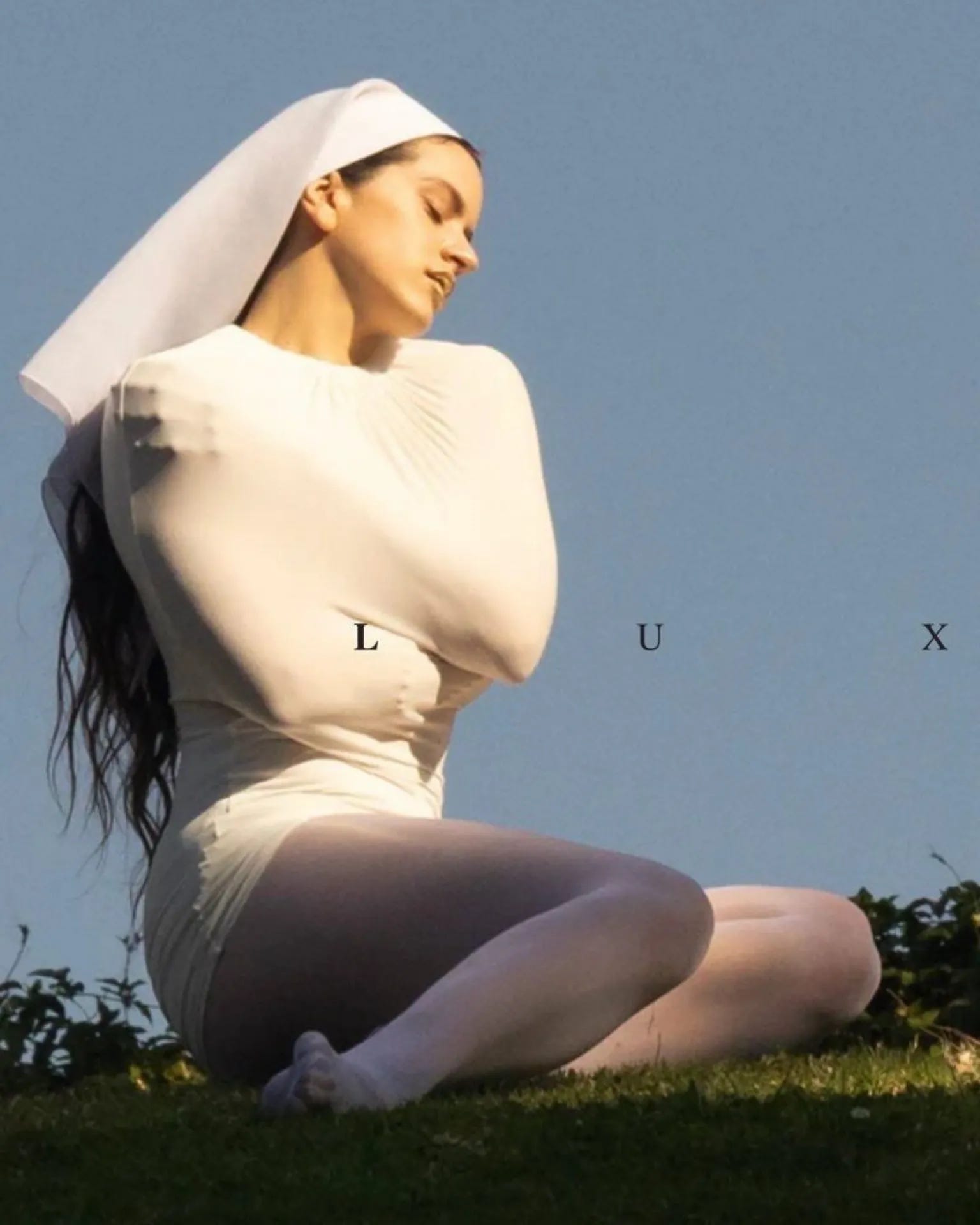
At thirty-three, Rosalía is a Catalan musician with a classical education from the conservatorium, though she began her singing career in flamenco. Her debut album Los Ángeles (2017) was followed by El Mal Querer (2018), which brought her international recognition and four hit singles. Then came Motomami (2022), inspired by reggaeton from the Hispanic islands — and now Lux. Each album is unique. Rosalía refuses to be pigeonholed.
Rosalía is not the first artist to be accused of cultural appropriation. Let’s stay in Barcelona. Picasso, for instance, was famous for borrowing — and even openly advocated for it. He once said, “Good artists copy; great artists steal.” He was accused of drawing on motifs and styles from African art during the early twentieth-century movement known as Primitivism, which deeply influenced his work and that of his contemporaries.
It’s important to be critical — to keep a discerning eye. Yet both Rosalía and Picasso are, in their own ways, building bridges between cultures. This is what cultures do when they speak to one another: they exchange, learn, and spark curiosity. I wouldn’t want a uniform culture across the world — nor should we allow that. But interchange is something else entirely.
Imagine a culture that, in the name of protectionism, closes itself off from the outside world. Who would want to belong to that suffocating space? The opposite — exchange — is what keeps cultures alive. It’s how we learn from each other, inspire each other, and generate the energy to evolve. Through such dialogue we enrich our traditions, strive for difference, and invent forms that better reflect who we are — opening our doors to one another along the way.
I recall two years ago, at a summer street concert in Figueres, a singer began singing “Waltzing Matilda” — but in Catalan. A lovely surprise. The artist was Guillem Gisbert. I wondered how the audience received it. Of course, this tune evokes different emotions for Australians than it would for Catalans. As a first-generation Aussie, that night the song wrapped around me. I felt included. I felt at home in Catalonia. Thanks to Guillem Gisbert.²
Those who push the cultural appropriation argument often claim that stories should only belong to those who live them. They ask how someone could possibly know the experience of a pregnant woman, an Indigenous person, or a Black person — and argue that such stories should be left to those people to tell. They see others’ attempts as inauthentic, profit-driven, or exploitative.
But what if those voices don’t have the same access to platforms? What if artists like Rosalía, who have the reach, can amplify or reinterpret those stories while showing respect and transparency? Let’s face it — except for the Ukrainian songs featured in Eurovision (which, truthfully, I can hardly recall), I had never heard a Ukrainian song until Lux.
In the end, we are humanity — one, shared, and endlessly intertwined.
As Rosalía says, we belong to this whole world; we don’t have to lock ourselves within the cultures we inherit by birth.
Sharing and borrowing transparently and respectfully between cultures is no issue.
Like that evening in Figueres, when a Catalan voice carried Waltzing Matilda through the warm air — music reminding us to build bridges, not borders, and let cultures travel.
Footnotes
¹ I respect Rosalía as an artist. I like some of her music — though not all. Her inclusion of reggaeton, for instance, isn’t really my kind of sound. She’s a controversial figure: she moves in circles that include the Kardashians, projects a religious and seemingly conservative image, and has remained silent on geopolitical issues such as the wars in Ukraine and Gaza. Yet she reads, she thinks, and she seems to choose what’s best for her. I like her composure and intelligence in interviews. This reflection isn’t about endorsing her music or her public stance; it’s about questioning the absurdity of the cultural appropriation accusations directed at her and other artists.
² I was unable to find any information about why Guillem Gisbert sings “Waltzing Matilda” or any link he might have to Australia.
Relevant links (may be behind paywall)
No culture remains unchanged, no society unaltered. When we, as you say, respectfully engage other cultures, we are more likely to build bridges
Yes yes yes. A lot of great points here, nice work.
There are valid points on both sides - for example, I agree with her critics that we should be amplifying marginalised voices instead of speaking (or singing) for them, but the whole genre of pop is about referencing and it’s something that I believe Rosalía manages to do gracefully, with respect to the source.
I write about this in my (first ever!) post, I would be keen to hear what you think :)
https://heidiwarwick.substack.com/p/lux-isnt-just-an-album-its-a-reminder