
Sacred Geometry - A Confluence of Art and Ritual
From Rubem Valentim's Oxalá Temple to the Totems We Still Create

I was instantly drawn to Oxalá Temple by Rubem Valentim.
Inside a white chapel rested white-painted wooden sculptures made of geometric shapes stacked upon each other. They were larger than human size and spaced generously apart, like figures in conversation. These totem-like structures stood in careful formation, resembling a well-manicured garden that invited visitors to walk among them.
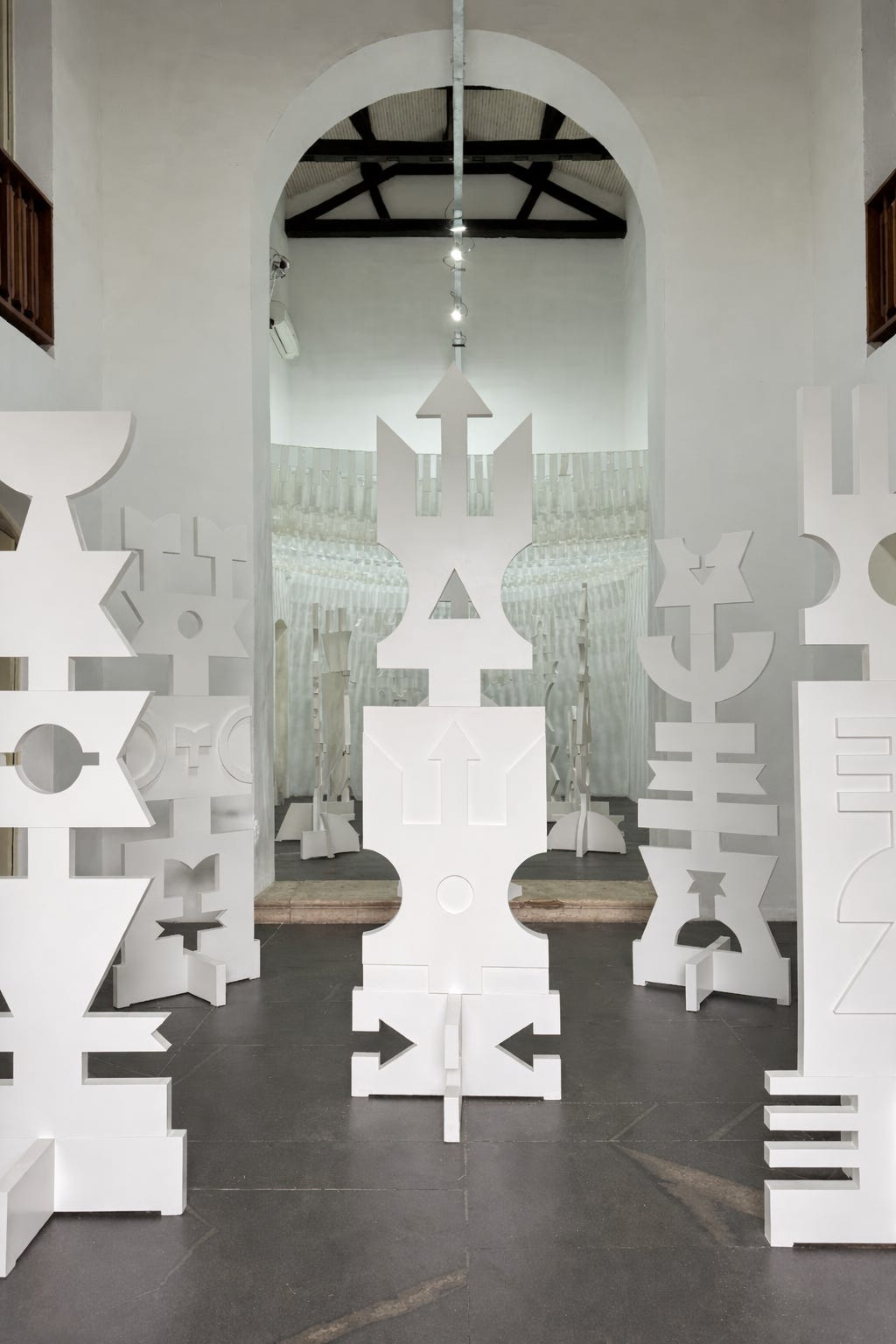
At first, I had no idea what these works represented.
I was simply fascinated by the beauty of the geometric proportions, the uniqueness of each structure, and—despite that individuality—the harmony they formed together. A sense of peacefulness settled over the space. I noticed that I had stopped trying to interpret or decode the works. Instead, I felt relaxed. My mind seemed cleansed. There was a spiritual sensation.
Along the walls hung works on paper—repeating the same geometric patterns found in the sculptures. They were elegant and restrained. Each contained a single bold colour—blue, red, or brown. Yet these colours did not distract. They reinforced the harmony of the space.
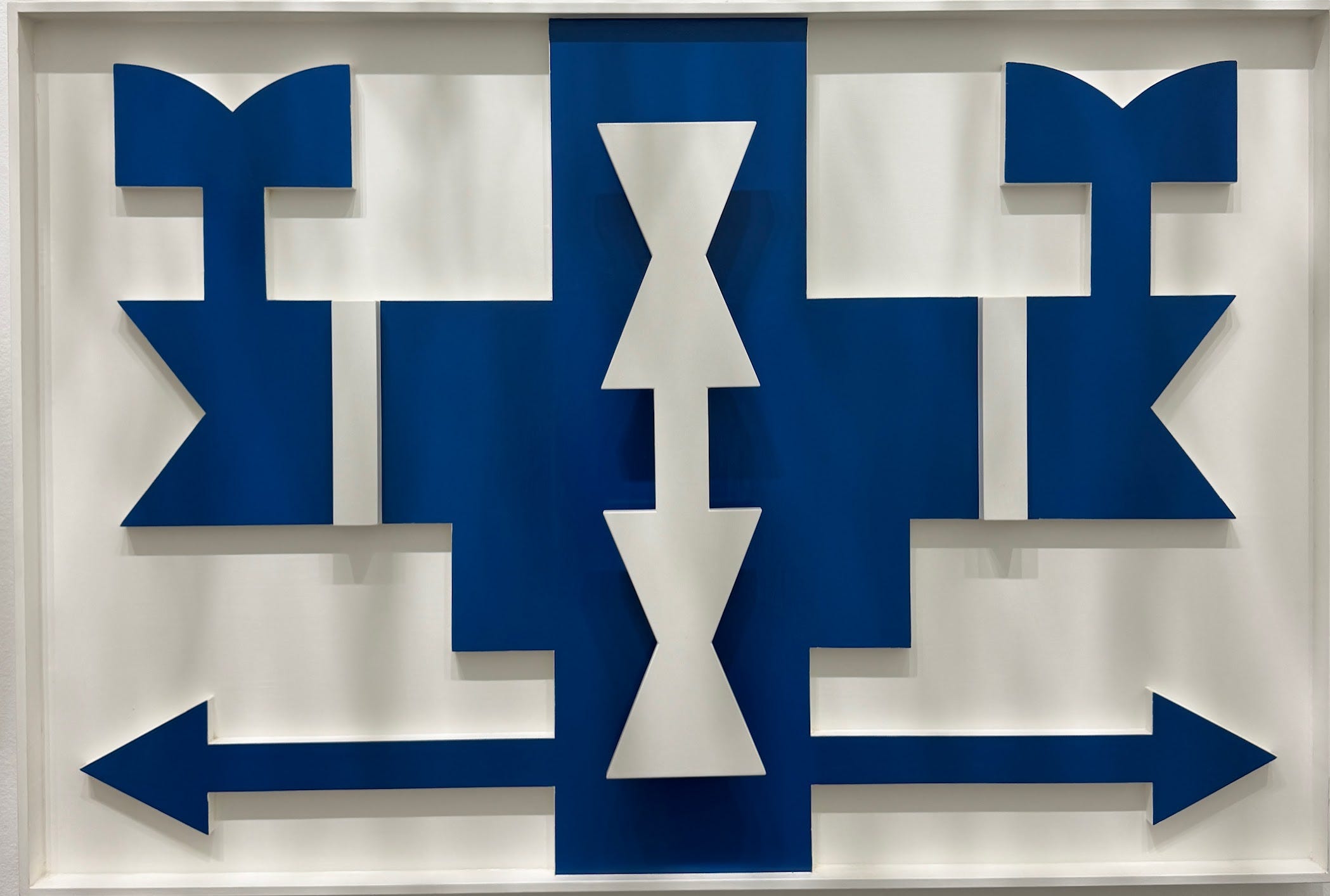
Oxalá Temple, first exhibited at the 14th Bienal de São Paulo, is composed of twenty sculptures and reliefs and belongs to the permanent collection of the Museu de Arte Moderna da Bahia. The works have travelled widely through a long series of international exhibitions. I felt fortunate to encounter them while they were briefly back in Salvador before their next scheduled tour.
This exhibition honours the grandeur of Rubem Valentim (1922–1991), who developed a distinctive form of geometric abstraction rooted in Afro-Brazilian identity. Growing up in Salvador, a city shaped by strong African traditions, he absorbed the visual symbols and sacred emblems that represent spiritual forces and ancestral presence.
As Rubem Valentim said:
“Art is a poetic product whose existence defies time and therefore liberates humanity.”
Rather than treating geometry as pure form, Valentim transformed shapes into symbolic structures inspired by the emblems of divine spirits. Triangles, circles, and arrows became part of a personal visual language—one that reflected Brazil’s layered history of African, Indigenous, and European influences.
Through this synthesis, he demonstrated that geometric abstraction could carry memory, spirituality, and identity—creating works that feel at once modern and ancient, structured yet deeply spiritual.
Our Connected Cultures
Universality of Totems in the History of Humanity
Oxalá, the figure that Rubem Valentim depicts in his works, originates from the traditions of the Yoruba people of West Africa. He is one of the most important spiritual figures in Afro-Brazilian religions such as Candomblé and Umbanda, where African beliefs travelled across the Atlantic and found new expression in Brazil.
Valentim deliberately created totem-like sculptures to express ritual symbolism. They may resemble totems found elsewhere in the world, yet they remain culturally distinct. The similarity does not come from direct lineage, but from something more universal—a shared human instinct to give form to the sacred.
This feels like a classic case of convergent symbolism: different cultures, separated by distance and time, arriving at similar visual languages to express spiritual ideas.
Archaeologists have found some of the oldest monumental ritual structures at Göbekli Tepe, dating roughly from 9600 to 8200 BCE—thousands of years older than Stonehenge or the Egyptian pyramids. There, T-shaped stone pillars—believed to represent stylised human figures—stand in circular formations that feel uncannily familiar to the vertical symbolic forms seen across many cultures.
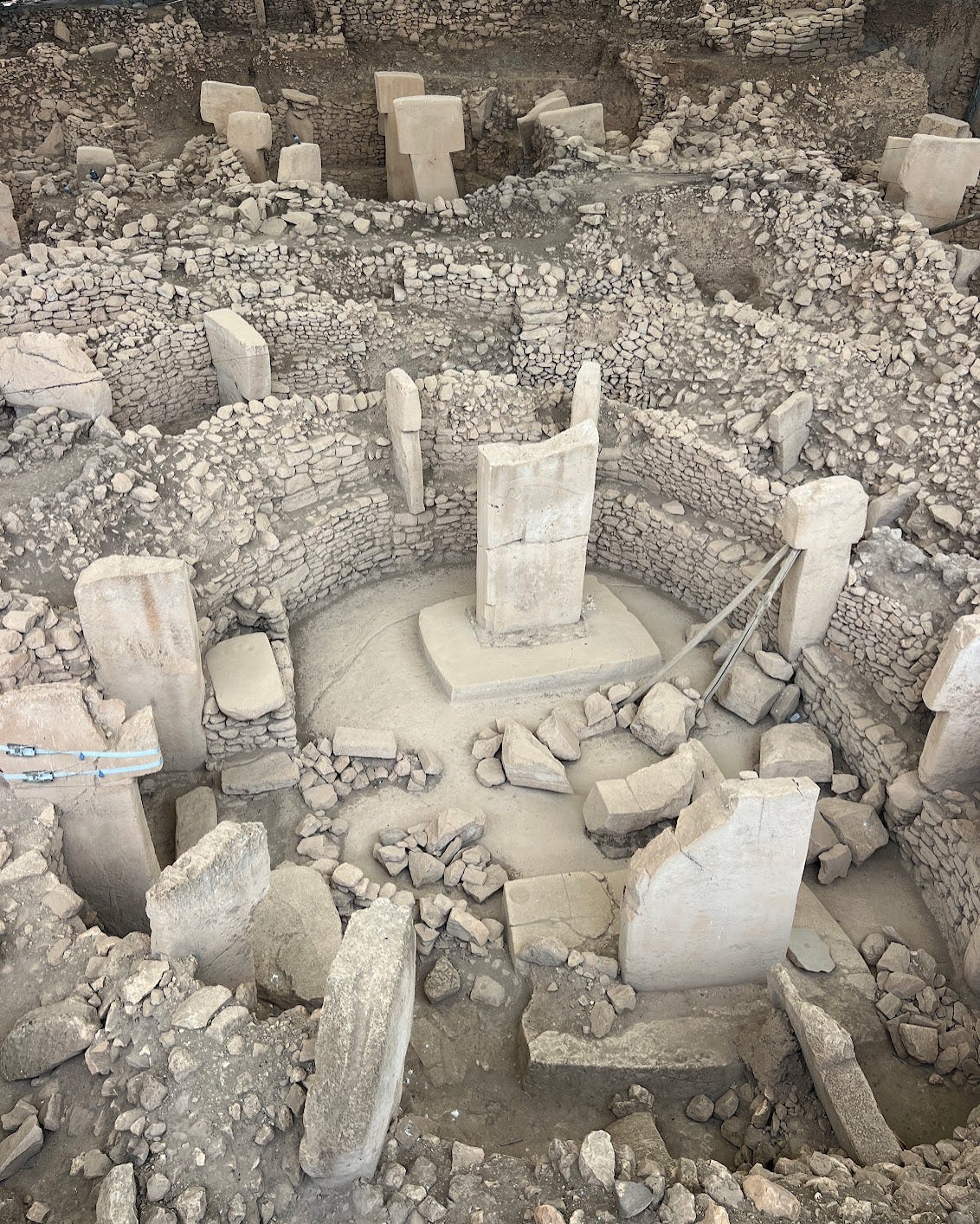
Across history, cultures have repeatedly created upright symbolic forms that represent spiritual forces, encode cosmic relationships, serve as identity markers, and function within ritual spaces. We see echoes of this impulse in many places—from Northwest Coast totem poles and African ritual staffs to Polynesian tiki figures and Orixá emblems.
Standing among Valentim’s sculptures, I began to sense that these connections are not merely historical.
They are human.
A Linguistic Coincidence
There is another connection—this time through language—that made me pause.
In Portuguese, the word Oxalá means hopefully. For those of us who move between languages, this sounds immediately familiar.
In Spanish, the same sentiment appears as ojalá.
In Turkish, it becomes inşallah.
All trace their origins to the Arabic expression Inshallah, rooted in the teachings of the Qur’an, which encourages humility when speaking about the future.
Across continents and centuries, different cultures adopted the phrase into daily language. Today, it is spoken casually, often without reflection, yet it still carries the acknowledgment that the future is never fully ours to command.
Standing inside Valentim’s geometric temple, surrounded by symbols shaped by African traditions and Brazilian history, the word Oxalá suddenly felt richer than vocabulary.
It felt like a reminder—
that cultures travel,
that symbols repeat,
and that meanings sometimes converge in ways that feel, almost, like coincidence.
Totems Still Relevant
I wish to finish this post with a simple thought and memoriam: totems are not relics of the past. They remain part of how we mark meaning, memory, and transition.
About a year and a half ago, a close friend lost her lifelong companion and husband far too early. Jim was an academic, and like many good academics, he wrote a lot, leaving behind many published papers filled with his research, thoughts, and discoveries.
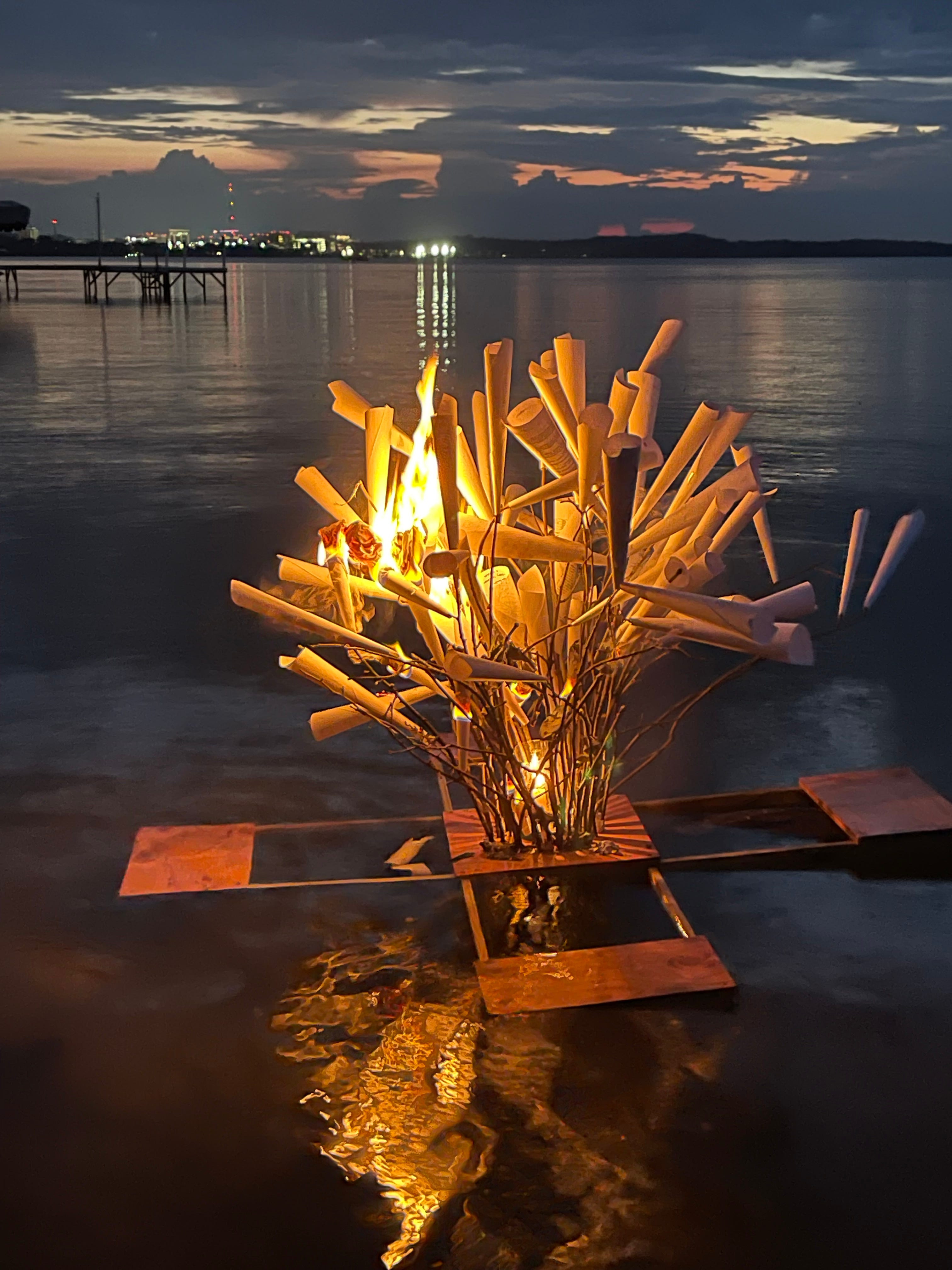
My friend collaborated with a fellow engineer and an artist friend of the couple to create a totem-like structure in his memory. His papers were placed into it like branches, forming a fragile symbolic body, and the structure was set alight on Lake Mendota in Madison, Wisconsin, along the shores of the campus where they had all once studied for their PhDs.
It was both a ritual and an artwork.
A farewell memorialised.
A gesture that turned grief into something monumental—fitting for Jim.
Writing this post made me realise that we still need symbols and forms—ways of expression that allow us to say what words alone cannot.
You remind us of our connections to our ancestors, over many generations, from many different places, but we really do share a common humanity. We forget that we are all connected and share our existence.
There's a lot of literature on sacred geometry and how the shapes can change our energy, I never thought about how some symbols like a totem, or in UK we have village may poles, that bring us together in ceremony and dance